1 – 2 November 2025 | Hosted at Indian Institute of Technology Mandi, H.P., India
Supported by TATA Trusts
Big and small decisions mold our personal lives, affect business and organizations, and have far-reaching implications for society at large. We encourage thoughtful deliberations on decision-making and applied behavioral science, with an added emphasis on implications or applications in real-life settings, markets, naturalistic environments, and decisions that involve ecological factors, intention, or behavioral change. This conference is uniquely located as the preeminent Behavioral Science and Decision-Making conference of the global south inviting people to gather amidst the inspiring landscapes of the Himalayan foothills.
Venue: Turing Hall, A17-2A, North Campus, IIT Mandi, VPO Kamand, District Mandi, HP 175005
1st November
Registration: 9:00 – 9:50 am
| 10:00-11:00 | Welcome session and lighting of the lamp Opening comments:The Director, IIT MandiProf. Arnav Bhavsar, Chair, IKSMHA Centre, IIT MandiProf. Shubhajit Roy Chowdhury, Chair, Centre for Human-Computer Interaction, IIT MandiProf. K V Uday, Chair, Centre for Climate Change and Disaster Management, IIT Mandi Welcome by Convener and Host: Dr. Varun DuttIntroduction by Co-Convenor: Dr. Sumitava Mukherjee |
| 11:00-11:15 Buffer/Tea/Coffee | |
| Theme: Environment, Climate, and Sustainability | |
| 11:15-11:45 | Talk by Convener, Prof. Varun Dutt: Psychology of Climate Decision-Making: Influence of Feedback, Probability, and Bias |
| 11:45-12:10 | Talk by Prof Venkata Kala Uday Disaster preparedness in the Himalayas |
| 12:10-12:30 | Talk 1 by Akanksha Singh: Simulating Climate Strategy: Behavioral Shifts in Farmer Investment under Uncertainty in the Western Himalayas(15 min + 5 min QA) |
| 12:30-13:30 | Invited talk by Prof. Kanchan Mukherjee (online)Field experiments in conservation (45 min talk + 15 min QA) |
| 13:30- 14:30 LUNCH | |
| 14:30-15:30 | Flash talks session 1 (11 x 5 = 55 min) |
| 15:30-16:25 | Poster session 1 with Tea/Coffee (n=1 to 11) (see list below) |
| 16:30-17:30 | Invited talk by Prof. Shyam Sunder (online)Complexity, Risk, and Causality: Consequences for Decision Making (45 min talk + 15 min QA) |
| 17:30-18:00 | Applying Behavioral Science (Discussion) |
| 18:00-18:15 | End of Day 1Message from SJDM/EADM |
| 19:30-21:30 Cultural interaction with DINNER and group photo (With compliments from Tata Trusts | |
2nd November
| Theme: On-field Behavior and Decisions | |
| 10:00-10:20 | Talk 2 by Dr. Puneet Arora : The Unequal Effects of Self-Promotion: Evidence from a Field Experiment(15 min + 5 min QA) |
| 10:20-10:40 | Talk 3 by Rishav Singh: On-field Decision Making by Goalkeepers during Football Penalty Kicks: An Ecological Approach(15 min + 5 min QA) |
| 10:40-11:40 | Invited Talk by Prof. Marieke van VugtDrift diffusion models in the real world: the case of bicycle parking (45 min talk + 15 min QA) |
| 11:40-11:55 Buffer/Tea/Coffee | |
| 12:00-13:00 | Invited talk by Dr. Gurpreet Kaur (online)The Cognitive Foundations of Critical Thinking: Strategies for Enhancement (45 min talk + 15 min QA) |
| 13:00 to 14:00 LUNCH | |
| Theme: Emerging Technology | |
| 14:10-15:10 | 2025 Keynote by Prof. Meyer Using Algorithmic Decision Support in high-stakes domains: Models and empirical studies (45 min talk + 15 min QA) |
| 15:10-15:30 | Talk 4 by Pratishtha Gupta : Integration of Machine Learning Models for High-Risk Pregnancy Screening in Rural Primary Healthcare (15 min + 5 min QA) |
| 15:30-15:40 Buffer Break | |
| 15:45-16:45 | Flash talks session 2 (11 x 5 = 55 min) |
| 16:45-17:40 | Poster session 2 with Tea/Coffee (n=12 to 22) (See List below) |
| 17:45-18:15 | General Body Meeting: Looking Ahead to Next Year and Feedback All participants and attendees are to attend |
| 18:15-18:30 | Closing Session Closing comments by:Prof. Aditya Nigam, Chair, School of Computing and Electrical Engineering, IIT MandiCo-Convener: Dr. Sumitava MukherjeeCo-Convener and Host: Dr. Varun DuttVote of thanks |
List of Posters: (Numbers are IDs only and do not mean any rank order)
| DAY 1 (1 Nov 2025) | ||
| 1 | A Decision Tree for Ethical Leadership and Organizational Excellence: A Model Based on Bhagavad Texts | Ansul Agarwal |
| 2 | A Yogic Framework of Enhanced Judgment and Decision Making: Insights from Long-Term Yoga Practitioners | Nantu Shaw |
| 3 | Victim Support to Victim Empowerment: Psychological Interventions for a Just and Compassionate Bharat | Sonali Dahiya |
| 4 | AI-Driven Decision Making in The Context of Mental Health | Zaid Khan |
| 5 | Brain Fog, Decision-Making, and Triguna Personality among Females going through the Menopausal Transition Phase | Animesh Tomer |
| 6 | Cognitive Flexibility, Impulsivity and Decision-Making Efficiency Across Generations: A Factorial Approach | Japneet Kaur Sidana |
| 7 | Effort-Based Strategy Selection in Multi-Attribute Decision Making: When Bounded Rationality Predicts Optimal Behavior | Tapas Rath |
| 8 | From choices to collisions: The role of decision style and impulsivity in risky driving | Aastha Masand |
| 9 | Exploring Attentional Allocation in the Dictator Game: The Effects of Cognitive Load, Social Ties and Endowment | Anisha Mitra |
| 10 | Exploring Psychological and Social Framework towards Rapist Aggression through Gendered Attitudes – A Focus Group Discussion | Aanya |
| 11 | Exploring the process of suicidal decision-making among impoverished and migrant populations in India | Debopriya Nandy |
| DAY 2 (2 Nov 2025) | ||
| 12 | Freedom of Choice and Power Redistribution Improves Responder Welfare- Do They? | Adhiraj Chowdhury |
| 13 | Evaluating Situational Awareness Assessments and Their Interactions with Working Memory in Sportspersons | Aashi Gaba |
| 14 | From Prompts to Possibilities: Generative AI’s Role in Fostering Need for Cognition and Creativity in Young Adults | Jiya Singhal |
| 15 | Gender Differences in Decision-Making Performance A Comparative Study of Cognitive Strategies in Young Indian Adults | Sri Spoorthi Vattem |
| 16 | How Significant are superstitious beliefs for GEN-Z in making decisions in daily life? | Vedika Kapoor |
| 17 | Impact of sleep quality on attention span of college going students | Saanjh Sadhoo |
| 18 | Mediating Role of Decision Making Between Gender and Hostile Driving Behaviour | Amisha Verma |
| 19 | Moral Framing and Public Engagement: An Analysis of the Digital Public Discourse on Lok Sabha Elections 2024 | Saumya Rastogi |
| 20 | Neuromarketing and Subliminal Strategies: Factors Influencing Consumer Behaviour | Ashlin James |
| 21 | Scale Construction for Ecological Empathy | Kanika Sethi |
| 22 | The Cognitive Pathways of Faith: Exploring the Mediating Role of Metacognition in Religiosity and Decision-Making | Tanisha Shukla |
Contact and Organizers:
Convenor, Local host, Organizer: Prof. Varun Dutt
Co-Convenor: Prof. Sumitava Mukherjee
Email for queries and contact: decisionmakingconference@gmail.com
Venue: Indian Institute of Technology Mandi
Speakers
2025 Keynote:

Prof. Joachim Meyer
Celia and Marcos Maus Professor of Data Sciences in the School of Industrial and Intelligent Systems Engineering at Tel Aviv University. (Webpage)
Title of the talk: Using Algorithmic Decision Support in high-stakes domains: Models and empirical studies
(In person)
2025 Invited Talks
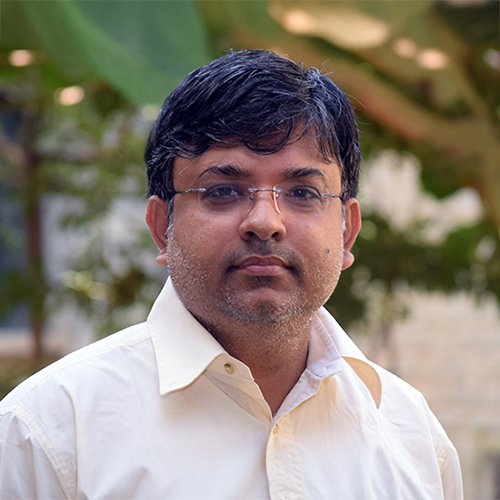
Prof. Kanchan Mukherjee
Professor in Organizational Behavior & Human Resources Management area at Indian Institute of Management Bangalore (webpage)
Title of the talk: Field experiments in conservation
(Online)
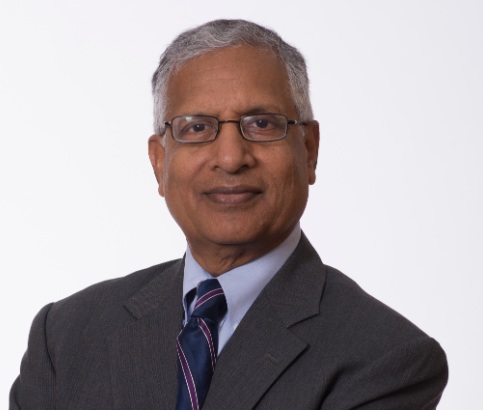
Prof. Shyam Sunder
James L. Frank Professor Emeritus of Management and Economics at Yale School of Management, Yale Univeristy (webpage)
Title of the talk: Complexity, Risk, and Causality: Consequences for Decision Making
(Online)

Prof. Marieke van Vugt
Associate professor, Cognitive Modeling group at University of Groningen (webpage) in the Bernoulli Institute for Mathematics, Computer Science and Artificial Intelligence
Title of the talk: Drift diffusion models in the real world: the case of bicycle parking
(In person)
Dr. Gurpreet Kaur
Scientist F, Head, Intelligence and Aptitude Division, Defence Institute of Psychological Research, Defence Research Development Organization
Title of the talk: The Cognitive Foundations of Critical Thinking: Strategies for Enhancement
(Online)
ARCHIVE of the call
With both existing and emerging challenges on our agenda, behavioral science not only lies at the core of such an understanding but also can work towards their solutions. Thus, we aim to be a vibrant interdisciplinary community where scientists, practitioners, enthusiasts, and learners from different backgrounds / fields come together to exchange scientific knowledge, debate, and collaborate towards solutions that matter. With the vision to utilize behavioral science for the greater good, our discussions are targeted to align with the Sustainable Development Goals (SDGs) to co-create a better world.
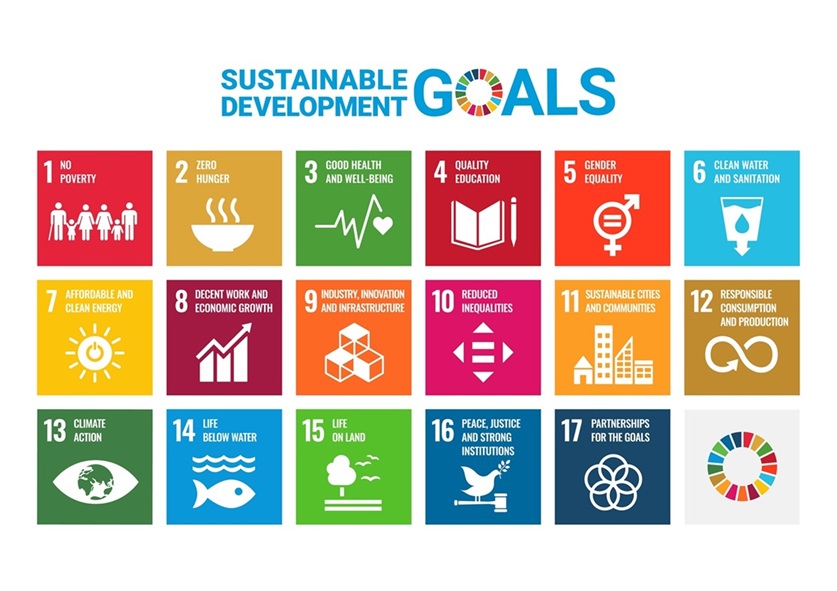
Topics in the following broad areas are welcome, along with other related ones:
- Poverty and decision making under scarcity
- Food and water decisions, reducing hunger and minimizing wastage
- Health-related decisions and Wellbeing, Mental health, Medical Decision Making, Happiness and good life
- Education and Learning, Judgments and decisions in the education sector
- Behavioral aspects of affordable, clean, and sustainable energy use
- Military decision making and defence systems
- Decision making in sports, physical activity, Embodied cognition
- Machine behavior, Decision making by Artificial intelligence, Algorithmic decision making
- Human-Machine interaction, Human-computer or Human-Robot decisions, Brain-Computer interfaces
- Organizational decision making and reduced decision bias / noise
- Consumer decision making and responsible consumption , (Neuro) Marketing
- Financial decision making and savings behavior, Behavioral finance, Financial markets
- Sustainable behavior and lifestyle
- Environmental decision making, Conservation, and climate-change related behavior
- Moral and Ethical decision making
- Arts and aesthetics, Neuroaesthetics
- Insights from Indian Knowledge systems and frameworks about decision making
- Boosting and Nudging better / informed decision making
- Behavioral directions towards promoting Peace and strong institutions
Let us collaborate, bringing our combined experience and imagination to bear in addressing the world’s and our own challenges through applied behavioral science and decision-making. Please relate your work to atleast one SDG goal from the list below.
Who Should Attend?
We offer a warm welcome to academic, corporate, and other institutional participants from diverse professional backgrounds or those in search of new directions in behavioral science / decision research. Our conference lays strong stress on diversity—of thought, methodologies, disciplines, expertise, and experiences. We, therefore, invite scholars, practitioners, researchers, and enthusiasts from fields including but not limited to psychology, neuroscience, computer science, ecology, management, anthropology, economics, design, and humanities. We call for a wide range of methodological paradigms, including empirical research (experimental, survey, neuroscientific paradigms; qualitative and quantitative), computational modeling, theoretical research, case studies, or policy recommendations. We aim to create a dynamic atmosphere where there is free exchange of varied ideas, perceptions, and creative thinking that is not bounded by disciplinary or methodological paradigms.
ATTEND TO PRESENT YOUR WORK OR IDEA
Submission Guidelines
A. Papers for talks
Format: Extended abstract (up to 1000 words) but ideally a complete paper in APA format (4000-6000 words) .
Details: Clearly state research question, discuss at length the methods, include statistical or computational analysis (ideally with sample size rationale and effect sizes, where relevant), and include detailed conclusions and implications or applications for society/sustainable development goals/organizations. Full papers should make significant theoretical, empirical, computational, or practical contributions to behavioral science and decision making. These submissions are towards a volume to be published by a respectable publishing company as an edited book/proceedings volume.
B. Posters
Format: Abstract (up to 500 words).
Details: Submissions are solicited for work-in-progress, initial-stage research, or proposed research (to get early feedback). Provide a brief description of your research question(s), objectives, methodologies (proposed or executed), significant findings or anticipated outcomes, and practical implications or applicability.
C. Media submissions
Concise summaries of empirical/theoretical findings appropriate for visual presentation in form of a chart/drawing/depiction; out-of-box art presentation or models of behavioral insights / behavioral change / deisgn of graphic towards promoting better decisions or behavioral science for good.
How to submit?
Full Papers and Abstracts need to be submitted to the following:
Dates
Submission deadline: 30th September 2025 anywhere on earth
Submission deadline: 5th October 2025 anywhere on earth
Intimation of acceptance of Abstract/Full Paper: Rolling, but before 10th October 2025
Registration: Kindly complete it by 11:59 pm on 20th October 2025
HOW TO ATTEND WITHOUT SUBMITTING:
In line with our philosophy of promoting more dialogue, and encouraging more people to join in, we have been reserving some slots for people to attend without making a presentation. This is ideal for those who would like to hear speakers or poster presenters, network, and learn. Anyone can attend without presenting – students, practitioners, academicians, professionals, and enthusiasts. Please apply soon, as we have limited capacity. Such applicants are required to fill out the form below Expected time 2-5 min):
Application deadline: 30th September 2025 anywhere on earth. Incase you missed and you are deeply intersted, please email.
Registration: Kindly complete it by 11:59 pm on 20th October 2025
Registration (Compulsory).
Registration can be made after receiving a decision or confirmation (for non-presenters) but latest by: 15th October 2025
Registration Fees:
- Presenters:
- INR 3000 for Indian participants holding a student ID as undergraduate and postgraduate students, INR 4000 for Indian participants holding a student ID as PhD students, and 6000 INR for Indian non-students including faculty/working professionals.
- 50 USD for international participants holding a student ID and 100 USD for international non-students.
- Attendees:
- 2000 INR for Indian participants
- 50 USD for international participants
Registration includes work-lunch and tea/snacks on both days.
Accommodation: Limited on-campus accommodation may be available at IIT Mandi guest house on a payment basis. You are welcome to enquire.
Certificates of participation
All attendees will be given a certificate.
 DecisionMaking.org.in